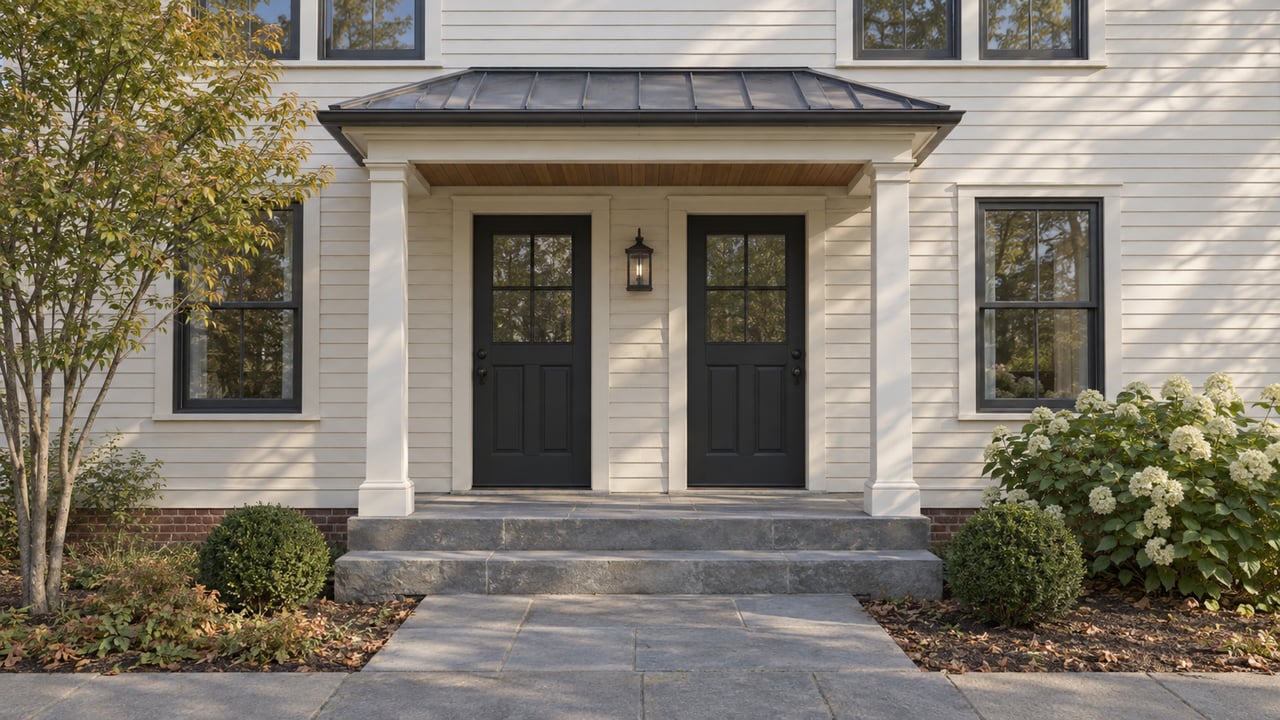
Why a Watertown Square Two-Family Can Outprice the Comps Next Door
October 1, 2026
October 1, 2026
What happens when two nearly identical two-family houses a block apart sell for wildly different prices, and the difference has nothing to do with the kitchen or the roof?
That is the question a handful of owners near Watertown Square are starting to ask, and the answer sits in a zoning map most of them have never opened. Watertown rewrote its zoning for the Square in November 2024 to comply with the state's MBTA Communities Law, and the rewrite did something more aggressive than the law required. The gap between what the state asked for and what the city actually zoned, and the gap between what the city zoned and what anyone expects to get built, is the whole story for anyone pricing property in this part of town right now.
The Massachusetts MBTA Communities Law, codified as Section 3A of the state's Zoning Act, requires cities and towns served by the MBTA to zone at least one district where multifamily housing is allowed as of right, without age restrictions, at a minimum of 15 units per acre. For Watertown, the state assigned a specific target: a zoning district with the capacity for 1,701 multifamily units. That figure is a planning threshold, not a construction order. The law tells a city how much building capacity its zoning map has to allow. It says nothing about how many units actually get built, or when.
Watertown didn't zone to the minimum. During the planning process, the city floated an option that would have zoned the entire 167-acre Watertown Square Area Plan boundary as by-right, which penciled out to over 6,000 units of theoretical capacity, far beyond the 1,701 the state required. The council settled on something in between: a mapped district with a calculated capacity of 3,133 units, according to the city's own planning documents, nearly double the state mandate.
That decision matters more than the headline number suggests. A city that zones exactly to the state minimum is complying. A city that zones to nearly double the minimum is signaling something to the market: this is where density is headed, and the city has put it in writing with a map attached. That signal moves land pricing years before a foundation gets poured, because a builder underwriting a purchase today is pricing the buildable envelope the zoning now allows, not the two-family sitting on the lot.
If the zoning capacity number tempts you to picture a wave of towers landing on Mount Auburn Street next year, Watertown's own flagship project argues against that read.
The city's Demonstration Project, a public-private redevelopment of the municipal parking lot behind CVS bounded by Spring, Summer, and Church Streets, is the clearest test case for what the new zoning can actually produce. The draft plan, released in April 2026, lays out two design options, both centered on a 247-unit mixed-use residential building with ground-floor retail, a public green space, and a new parking garage. The city has already identified a likely development partner in Hg80 Real Estate, the firm behind Assembly Row in Somerville.
The timeline is not fast. Acquiring the parcels, some through negotiated purchase and some through eminent domain, is estimated to cost $12.8 million, with another $4 million budgeted for relocating displaced residents and businesses and covering legal and administrative costs. Under the draft plan's own schedule, adoption and pre-development run through 2026 and 2027, property acquisition and displacement run 2027 to 2029, and construction doesn't begin until 2029, with the garage and units opening around 2031.
That is a five-year runway from draft plan to open doors, on the single project the city has invested the most planning into. If the city's own centerpiece takes that long, the theoretical capacity number was never meant to be read as a forecast.
Here is the part that actually matters for someone buying or selling near the Square right now. While the city works through a multi-year public redevelopment process on one lot, private developers have already filed for three separate projects elsewhere in the district, all faster and all smaller than the city's flagship.
The Triad Group filed for a 153-unit apartment building at 49-59 Mount Auburn Street, the largest private project filed so far under the new zoning. WSQ Development and Eaglebrook Capital filed plans for a 52-unit building at 108 Water Street, which was approved in November 2025. Torrington Properties filed for a 40-unit project on a vacant commercial lot at 33 Mount Auburn Street. None of these needed a redevelopment authority, an eminent domain process, or a multi-year public planning track. They needed a parcel that fell inside the mapped by-right district.
That's the mechanism worth understanding. Before the rezoning, a multifamily project on most of these lots required a special permit, which means a discretionary hearing, a board vote, and the real possibility of denial or delay. By-right zoning removes that step. A compliant project can move straight to site plan review. For a developer, that changes the math on what a parcel is worth, because it strips out months or years of entitlement risk. For an owner sitting on a well-located lot inside the district, it means the pool of interested buyers now includes builders who are pricing the buildable envelope, not just families pricing a home against recent comparable sales.
The by-right allowance doesn't apply to Watertown generally. It applies to a specific mapped area: the 167-acre Watertown Square Area Plan district, which runs west along Main Street to Lexington Street, south along Galen Street to the Newton line, east along Arsenal Street and North Beacon Street to Irving Street, and northwest along Mount Auburn Street to Patten Street.
Two lots on the same block can sit on opposite sides of that line. One qualifies for by-right multifamily development. The other doesn't, and still requires the special permit process that applied before 2024. A generic home value estimate can't see that distinction. It reads an address, pulls recent street sales, and prices the structure. It has no way of knowing whether the parcel underneath now permits a use that a builder would pay a premium for, or whether it sits just outside the line where none of this applies.
If you own a smaller multifamily or a tired two-family inside the mapped district, the relevant comparison isn't last year's sale down the street. It's what a builder can legally put on your lot today, and whether that builder is willing to pay for the entitlement risk they no longer have to take on. The three filed private projects, at 49-59 Mount Auburn Street, 108 Water Street, and 33 Mount Auburn Street, are the closest thing available right now to real evidence of what the market is actually willing to pay for a compliant parcel, since none of them required the years-long public process the CVS lot redevelopment does.
If you're looking to buy a quieter residential property near, but outside, the mapped district, the opposite logic applies. You're not competing with assemblage buyers or development-focused offers. You're buying a home the way homes have always been priced in Watertown, against recent sales of similar structures, without a zoning premium attached.
Either way, the first question worth answering before you price or offer on anything near Watertown Square is whether the specific parcel falls inside the adopted zoning map, not whether the neighborhood generally is "up and coming." That's a parcel-level fact, and it's checkable against the city's own zoning map before you make an offer or set a list price.
Does the rezoning mean my single-family home will be forced to allow an apartment building? No. The by-right allowance applies only to parcels inside the mapped Watertown Square Area Plan district. Outside that boundary, existing zoning and permit requirements are unchanged.
Will 3,133 units actually get built in Watertown Square? The city's own planning team has estimated realistic near-term redevelopment closer to 800 to 1,000 units, not the full mapped capacity. The 3,133 figure describes what the zoning legally permits if every parcel redeveloped to its maximum, which is not the same as a construction forecast.
How do I find out if a specific address is inside the by-right district? The adopted zoning map is available through the City of Watertown's planning department, and confirming a parcel's status is a quick, specific check worth doing before you list or offer on property near the Square.
If you're weighing what a specific parcel near Watertown Square is actually worth under the new zoning, or want a clear-eyed read on a property anywhere else in Greater Boston, Alexandra Haueisen can walk through what the map means for your address.
Stay up to date on the latest real estate trends.
Whether you're ready to buy, preparing to sell, or simply exploring your next steps in the Greater Boston area, Alexandra is here to help you move forward with clarity and confidence. She offers personalized consultations, market insights, property valuation guidance, and tailored recommendations based on your goals. Reach out today to start a conversation and experience attentive, detail-driven support that leads to meaningful results.