The South End Historic District: What Actually Slows Down a Renovation
August 27, 2026
August 27, 2026
Most guides to buying in the South End treat the historic district as a footnote, a warning that you cannot repaint your brick or swap a window without asking first. That much is true. What gets left out is the part that actually costs buyers time: the review board that governs South End rowhouses meets once a month, and the ground those rowhouses sit on is more fragile than most renovation budgets account for.
If you are closing on a South End property with renovation plans already sketched out, the aesthetic rules are the easy part to research. The calendar and the foundation are the parts that catch people mid-project.
The South End Landmark District Commission holds its public hearing on the first Tuesday of every month. Applications have to be judged complete by staff fifteen business days before that hearing to make the agenda. Miss the cutoff by a day and the project waits a full month, not a few days, before it is even heard.
That math matters more than it sounds like it should. A homeowner who submits a window replacement application on a Wednesday might assume the following Tuesday's hearing is in play. It is not, unless the paperwork cleared review three weeks earlier. And Boston's guidance is blunt that staff will not review a submission for completeness the moment it lands, so the safest assumption is to add a buffer, not shave one off.
For a straightforward repair, this is an inconvenience. For a renovation with a contractor on standby and a lease or mortgage clock running, a single missed submission window can mean a project sits idle for four to six weeks before the actual work has even been approved to start.
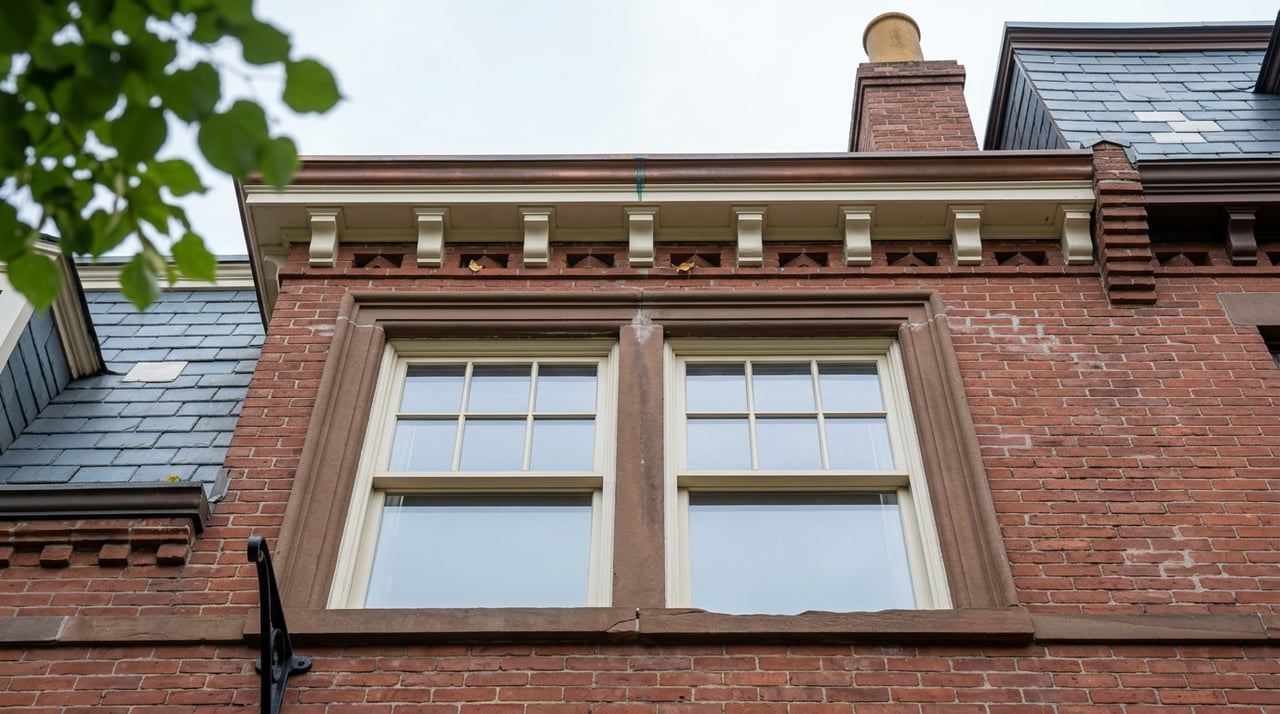
The rulebook itself, last revised in 1999, is granular in ways that surprise people who assume "historic district" mostly means brick and paint color. The commission's authority covers window openings, masonry repointing, fire escapes, signage, front yard fencing, and rear additions visible from a public way. Interior work is generally exempt, but plenty of interior projects trigger exterior review anyway. A new HVAC condenser, a vent, a roof deck accessed from inside the house: all of these count as exterior changes because some visible piece of them lives outside the wall.
A sample of what has actually crossed the commission's desk in the past two years shows the range:
That last example is worth sitting with. A fence is not a renovation in the way most buyers picture the word, but it is still subject to the same design review as a rear addition. The commission's standards are explicit that new openings in a facade will not be approved and that original window arrangements have to be retained, down to the muntin pattern. One approved application for a single window at Rutland Square specified a Pella Reserve wood window with a historically accurate grille profile bonded to match three existing windows in the unit above it. That is the level of detail a one-window swap can require.
The South End was not always land. Boston's own history of the district notes that it was originally marshland bisected by a narrow strip called the Neck, now Washington Street, filled in and developed starting around 1850. That history is not just trivia. Rowhouses built on filled land in this era typically rest on wood pilings driven into the soil, and those pilings only stay sound as long as they remain submerged in groundwater. Let the water table drop and the exposed wood begins to rot, which is a foundation problem, not a facade problem.
Because of this, parts of the South End sit inside a groundwater conservation overlay, Article 32 of the city's zoning code, that requires groundwater-recharge systems on projects that could affect the water table. This overlay exists specifically to protect the wood-pile foundations under South End and Back Bay buildings. A renovation that involves excavation, a new foundation element, or significant changes to how water drains around the building can pull this overlay into scope even if the project has nothing to do with the historic review of the facade.
The practical takeaway: a buyer planning a below-grade addition or a major structural change should ask early whether groundwater monitoring or a recharge system applies, not after a contractor has already broken ground.
Central air is one of the most common upgrades buyers want in a South End rowhouse, and it runs straight into both problems above. A condenser mounted on a rear patio or roof counts as exterior work subject to Landmarks review. Traditional ductwork also tends to require more demolition inside walls that may be historic or may sit close to foundation elements the city wants left alone.
Two practical paths show up repeatedly in South End projects. High-velocity duct systems use small flexible tubing that can run through existing wall cavities with far less demolition than traditional ducts, and installation typically runs two to three days rather than one to two weeks. Ductless mini-split systems go even further: one South End brownstone project simply mounted the outdoor condenser on the back patio and routed the line set through a piece of crown molding, keeping the brick facade untouched. Either way, a permit from Boston's Inspectional Services Department is still required, separate from any Landmarks sign-off on the visible unit itself.
Put the pieces together and a South End renovation involves more than one clock running at once.
| Step | What it requires |
|---|---|
| Application completeness | Filed 15 business days before the next hearing |
| Landmark District hearing | Held once a month, first Tuesday |
| Certificate of Design Approval | Issued after commission vote, required before permitting |
| Building permit | Filed with Inspectional Services after the certificate is in hand |
| ZBA variance, if needed | Adds several weeks on top of the above, common for roof decks |
Historic district review alone can add thirty to sixty days to a project timeline before the standard building permit process even starts. Roof decks are a frequent trigger for a second layer of review, since they often need both a Landmarks certificate and a zoning variance from the Board of Appeal. Consultants who work these applications regularly point to roof deck and rear terrace approvals as some of the more involved cases on the docket, often requiring a variance filed alongside the design review rather than instead of it.
None of this means renovation in the South End is impractical. It means the timeline needs to be planned around the review calendar, not around when a contractor happens to be free.
If you are under contract on a South End property with renovation plans already in mind, a few questions are worth asking before you close, not after:
Has any exterior work on the property already gone through Landmarks review, and is there a Certificate of Design Approval on file that your architect can reference? Does your planned project touch anything below grade, including a new foundation element, an excavation, or a below-grade addition, that could bring the groundwater overlay into play? And if a roof deck is part of the plan, does the building's zoning allow it by right, or will you need a variance in addition to Landmarks approval?
None of these questions are things a standard home inspection will surface. They live in city permitting records and in the Landmark District's own application history, which is public and searchable through Boston's online portal.
A South End rowhouse is worth the process. Buyers who plan for the calendar, not just the design guidelines, are the ones who end up living in the finished project instead of waiting on it.
If you are weighing a South End purchase with renovation in mind, or want a second read on what a specific building's history with the Landmarks Commission looks like before you write an offer, Alexandra Haueisen has walked this process with South End buyers before and can help you build a realistic timeline into your offer strategy. Let's discuss your Boston move, call or message Alexandra today.
Stay up to date on the latest real estate trends.
Whether you're ready to buy, preparing to sell, or simply exploring your next steps in the Greater Boston area, Alexandra is here to help you move forward with clarity and confidence. She offers personalized consultations, market insights, property valuation guidance, and tailored recommendations based on your goals. Reach out today to start a conversation and experience attentive, detail-driven support that leads to meaningful results.