Considering A Move From Boston To Needham? What To Expect
May 14, 2026
May 14, 2026
Thinking about leaving Boston for more space, a quieter daily rhythm, and a home that feels more rooted? For many buyers, a move to Needham brings exactly that shift, but it also comes with a different price point, a different commute pattern, and a different housing search than you may be used to in the city. If you are weighing whether Needham fits your next chapter, this guide will help you understand what changes, what stays convenient, and what to plan for before you move. Let’s dive in.
A move from Boston to Needham is not just a change of address. It is usually a lifestyle shift from a dense, renter-heavy city environment to a smaller, more owner-occupied suburban town.
Needham had 32,931 residents in 2024, compared with Boston’s 673,458. Population density also looks very different, with Needham at 2,609.4 people per square mile and Boston at 13,976.7 people per square mile. In practical terms, that often means more space around you, less street activity, and a quieter day-to-day feel.
The ownership picture changes too. Needham’s owner-occupied rate is 83.1%, while Boston’s is 35.7%. For buyers coming from a condo or apartment setting, that can mean a stronger focus on long-term homeownership, property upkeep, and a neighborhood pattern built more around houses than multifamily buildings.
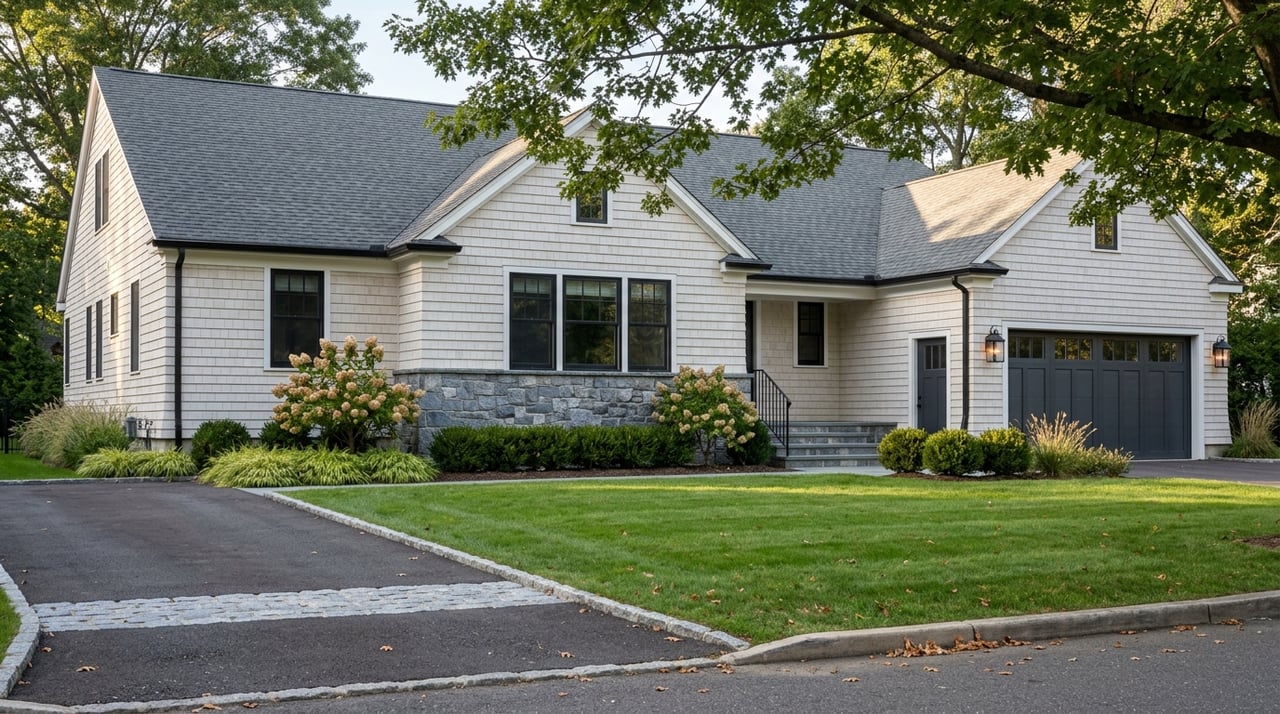
If you are used to browsing Boston condos, Needham will likely feel very different right away. The town’s housing pattern is heavily centered on single-family homes, with much more limited multifamily housing.
According to Needham’s housing plan, 90% of the town’s total land area and 98% of its undeveloped residential land are zoned for single-family use. Only about 4% of the town’s land area is zoned for multifamily housing. That makes detached homes, larger lots, and private outdoor space a much more typical part of the search.
For many Boston buyers, this is one of the biggest draws. You may find yourself trading shared walls, smaller square footage, and limited parking for a house, yard, driveway, and more storage. At the same time, you should expect fewer urban-style options and less of the compact condo inventory that is common in central Boston neighborhoods.
Needham’s planning documents note that much of its single-family land is laid out on roughly 10,000-square-foot lots, with some one-acre lots as well. That often translates to more privacy and more usable outdoor space.
It also means more home maintenance responsibility. If you are moving from a professionally managed condo building, you may be taking on yard work, exterior repairs, snow removal, and broader maintenance planning that did not fall on you before.
Space comes at a cost. Recent market snapshots cited in the research report show Needham’s median sale price at $2.1 million in March 2026, while Boston’s citywide median home sale price was $858,000 as of May 6, 2026.
Census data adds more context. Needham’s median value of an owner-occupied home is $1,188,500, and median monthly owner costs for mortgaged households are reported at more than $4,000. If you are moving from Boston, it is important to think beyond the purchase price and look closely at monthly carrying costs too.
One of the most common questions buyers ask is whether they can still stay connected to Boston for work, appointments, and social life. The answer is yes, but your routines may look different.
Needham’s official transportation page says the town has four MBTA Commuter Rail stops with regularly scheduled service to Boston’s South Station. The town also has access to Route 95/128 at exits 33 and 35A/35B, plus MBTA bus Route 59 connecting Needham with Watertown Square by way of Newtonville.
For many former Boston residents, that means rail remains a real option for commuting into the city. Still, daily life in Needham is generally more car-dependent than life in central Boston, especially for errands, activities, and regional trips.
Planning documents for Needham Center describe efforts to support walking, parking, traffic flow, and mixed-use redevelopment around the town center and commuter rail access. That is useful if you want some daily convenience near the center.
Even so, the broader town pattern is lower density. Compared with Boston, you are less likely to rely on walking alone for groceries, appointments, and everyday logistics. For many buyers, that is a manageable tradeoff, but it is one worth thinking through before you move.
Needham Center serves as the town’s civic and retail core, but it is not a big-city downtown. The town’s Downtown Study describes it as a mixed-use local shopping district focused on improving the pedestrian environment, parking, traffic, and housing opportunities.
Key places in or near the center corridor include Town Hall and the Common, Center Station, the Needham Public Library, Memorial Field, and Rosemary Lake. The town’s current Envision Needham Center project is aimed at making the area a more vibrant and sustainable destination.
If you are coming from Boston, this often feels like a shift from a city neighborhood commercial strip to a more local, town-centered routine. You may still have shops, services, and public spaces nearby, but the scale is smaller and the pace is calmer.
Needham has a strong parks-and-trails profile. The Park & Recreation Commission says it stewards more than 300 acres of parkland, and the town maps trails at places including the Town Forest, Ridge Hill, Needham Reservoir, Rosemary Lake, Cutler Park, and Hemlock Gorge.
The town also notes a walking path of about half a mile around Memorial Park. For many buyers, this access to open space becomes one of the biggest everyday benefits of the move.
For households planning around schools, activities, and long-term homeownership, Needham often feels more residential than Boston’s condo-heavy neighborhoods. Official district materials describe Needham Public Schools as organized around five neighborhood elementary schools.
That school structure helps explain why many buyers experience the town as more house-centered and schedule-driven. Even if your move is primarily about space, your day-to-day routine may start to revolve more around neighborhood patterns, parks, commuting, and local destinations.
When buyers compare Boston and Needham, the conversation often starts with square footage. It should also include taxes, maintenance, and ongoing ownership costs.
Needham uses a split tax rate. The town says the FY2025 residential rate is $10.60 per $1,000 of assessed value, and it estimates that the split saves the average residential owner $1,962 because commercial and industrial property is taxed at a higher rate than residential property.
That does not automatically make ownership inexpensive. Combined with higher home values and a single-family housing pattern, the move to Needham often means a larger purchase price, higher monthly carrying costs, and more responsibility for the property itself.
For many Boston condo owners, moving to Needham means trading:
That tradeoff can be well worth it if your priorities are changing. The key is to go into the move with a clear understanding of what your budget and daily routine will actually look like.
Needham can be a strong fit if you want more space, a more ownership-oriented housing market, commuter rail access to Boston, and a daily routine shaped more by home, parks, and town amenities than by dense city living. It may be less appealing if your top priority is a highly walkable, transit-first lifestyle with a wide range of condo choices.
If you are making this move, the details matter. The right strategy includes comparing your current Boston lifestyle with the kind of home, commute, and monthly costs you want next, then matching that to the right Needham property type and location.
A careful, research-driven approach can make that transition much smoother, especially if you are balancing timing, sale proceeds, or a move from an urban condo to a suburban single-family search. If you are planning your next step, Alexandra Haueisen can help you evaluate the move with clear guidance tailored to your goals.
Stay up to date on the latest real estate trends.

Whether you're ready to buy, preparing to sell, or simply exploring your next steps in the Greater Boston area, Alexandra is here to help you move forward with clarity and confidence. She offers personalized consultations, market insights, property valuation guidance, and tailored recommendations based on your goals. Reach out today to start a conversation and experience attentive, detail-driven support that leads to meaningful results.