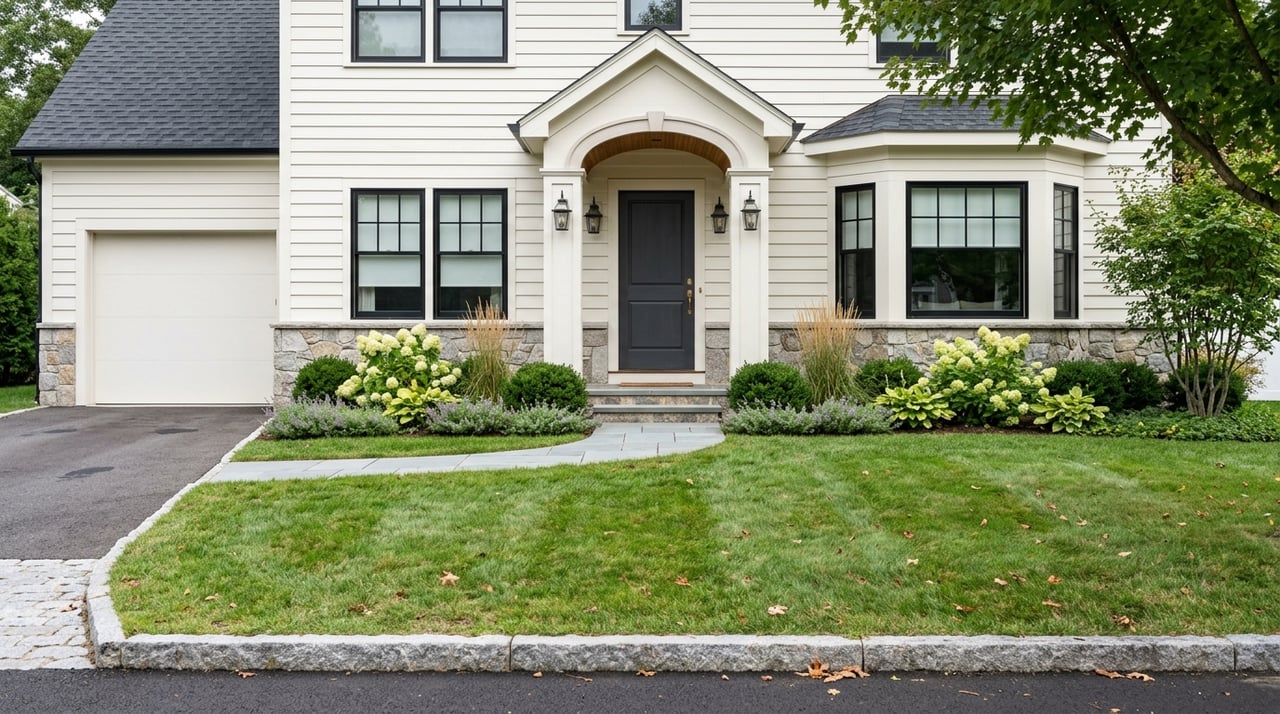
Move From Boston to Newton With More Confidence
April 2, 2026
April 2, 2026
Thinking about leaving Boston for more space, a different daily rhythm, or a home you can grow into? Newton is one of the most common next steps for buyers who want to stay connected to Boston while gaining a more village-based, residential setting. If you are considering the move, it helps to understand how Newton differs in housing, commuting, cost, and lifestyle before you start touring homes. Let’s dive in.
Newton is about seven miles west of downtown Boston, but the lifestyle shift can feel much bigger than the mileage suggests. The city describes itself as suburban-residential and is organized around 13 distinct village centers, rather than one continuous urban core. You can learn more from the City of Newton overview.
That village structure shapes everyday life. In Boston, you may be used to a denser, more continuous city experience. In Newton, your routines are often tied more closely to a local village center, nearby shops, and the specific transit options in your part of the city.
Newton is also far smaller by population. According to U.S. Census QuickFacts for Newton, Newton has 88,923 residents, compared with Boston’s 675,647. For many movers, that translates to a quieter pace and a more localized feel.
One of the biggest adjustments is cost. Newton is a strongly ownership-oriented market, with a 70.0% owner-occupied housing unit rate, while Boston’s owner-occupied rate is 35.7%, according to Census QuickFacts. That supports what many buyers already sense: Newton is often a step-up market within Greater Boston.
Home values reflect that shift. The same Census data shows a median owner-occupied home value of $1,264,900 in Newton compared with $731,700 in Boston. If you are moving from a Boston condo or rental, you may gain more space or a different housing style, but you will likely do so at a higher price point.
That does not mean every move from Boston to Newton follows the same path. Some buyers are upsizing into a single-family home, while others are moving from a high-end Boston condo into a townhouse or condominium near a Newton village center. The key is matching your budget to the kind of Newton lifestyle you want most.
If you are expecting endless new construction or a broad range of entry-level options, it is important to reset expectations early. Newton’s housing stock is still led by single-family homes, followed by condominiums and then two-family properties. In the city’s FY2026 classification hearing data, Newton listed 16,947 single-family properties and 5,883 condominiums out of 26,888 residential properties overall in a city housing document.
That matters because inventory mix affects your search. If you are moving from a Boston condo, you may find that Newton condos exist, but they are a smaller share of the overall market than single-family homes. If you want a house, you will see more options in that category, but competition and pricing may still be significant depending on location and condition.
Newton also states in a current housing appendix that housing diversity is limited and recent development has not materially changed the overall housing type and price mix. In simple terms, Newton is not a market where a wave of new supply has suddenly made home searching easy.
Not every Boston-to-Newton move starts with a purchase. For some households, renting first is the smartest way to learn the city, test commute options, and decide which village fits best.
Newton outlines four main rental categories on its housing resources page: private market rentals, subsidized housing, public housing, and rental vouchers. If you are not ready to buy right away, that can make a staged move possible while you get familiar with the area.
This approach can be especially useful if your priorities are still evolving. You may want to compare walkability, transit access, or how much space you truly need before making a long-term purchase decision.
One of Newton’s biggest advantages is that it offers stronger transit access than many buyers expect from a suburban location. According to the city’s public transportation page, the MBTA Green Line D branch has seven stations in Newton, and the Worcester/Framingham commuter rail line serves Auburndale, West Newton, and Newtonville.
The city also has direct access to I-90, I-95/Route 128, Route 9, Route 16, and Route 30. That gives many residents a mix of commuting choices, whether you drive, take rail transit, or combine both.
In Newton, commute convenience is not just about the city as a whole. It is often about the exact village and the distance from your home to a station or major route.
Homes near Green Line D stops or commuter rail stations generally offer the easiest public-transit access into Boston, based on the city’s transit map and station layout. Other parts of Newton may rely more on driving, local buses, or mixed-mode commuting. If you work in Boston several days a week, this is one of the first filters worth using in your search.
If you are hoping to keep a lower-car lifestyle, Newton may offer more flexibility than you expect. The city says it has more than 20 miles of bike lanes and paths, and the Charles River Reservation path network connects Newton to Waltham, Watertown, Cambridge, and Boston through information on its economic development page.
For some movers, that helps bridge the gap between city habits and suburban living. You may still drive more than you do in Boston, but in the right location, you may not need to give up transit, biking, or walkable errands entirely.
One of the most important things to know is that Newton is not defined by a single downtown. The city’s village history page explains that the 13 villages developed through patterns tied to railroads, rivers, mills, and commercial corridors.
That history still shapes how Newton feels today. Instead of asking only, “Do I want to live in Newton?” it is usually more helpful to ask, “Which village feels right for how I live?”
Some villages tend to appeal to Boston commuters because of their transit access. Others feel more residential and may offer larger lots or a quieter daily setting. Village centers with shops, services, and transit often feel like the closest match to a neighborhood-oriented urban lifestyle.
If schools are part of your decision, be sure to confirm details early in your search. Newton Public Schools is a large district with 15 elementary schools, 4 middle schools, 2 high schools, 2 alternative high school programs, and an integrated preschool program, according to the district’s district-at-a-glance page.
For the 2024-2025 school year, the district reports enrollment of 11,494 students, with average class sizes of 18.8 in elementary school, 21 in middle school, and 22 in high school academic areas. These numbers help give a general sense of district size and structure.
If a specific school assignment matters to your move, verify it by address before making an offer. Newton Public Schools provides a school-finder tool through its district site, and that step can save time and avoid confusion.
This is especially important because school assignment is an address-based detail, not something to assume from a listing description or a general village name. A careful, early check is part of a smart home search.
Newton often works well for buyers who want more ownership-oriented housing, more living space, and a more residential setting while staying close to Boston. The city’s own housing appendix notes demand from households with school-age children as well as seniors, which helps explain the broad appeal of the market in this city document.
For Boston buyers, the tradeoff is usually clear. You may gain space, a yard, or a more village-centered routine, but you will often face a higher price point and a more limited supply of multifamily or entry-level options. The best move is usually the one that balances your commute, budget, and lifestyle priorities rather than chasing just one feature.
If you are serious about moving from Boston to Newton, start by narrowing your search around three things: budget, commute, and housing type. Those filters will usually tell you more than a broad citywide search ever could.
Then compare villages in person whenever possible. Newton’s structure means one area can feel very different from another, even within the same city. A methodical search can help you avoid overpaying for the wrong fit and move with more confidence.
If you want expert guidance on buying, selling, or renting during your move, Alexandra Haueisen offers research-driven, hands-on support across Boston and Newton, with the local insight and personal guidance that can make a complex move feel much more manageable.
Stay up to date on the latest real estate trends.




Whether you're ready to buy, preparing to sell, or simply exploring your next steps in the Greater Boston area, Alexandra is here to help you move forward with clarity and confidence. She offers personalized consultations, market insights, property valuation guidance, and tailored recommendations based on your goals. Reach out today to start a conversation and experience attentive, detail-driven support that leads to meaningful results.