Relocating to Boston From Abroad: Where to Live First
April 9, 2026
April 9, 2026
Thinking about moving to Boston from another country? The hardest part is often not choosing whether to move, but deciding where to land first. If you are comparing city living, transit access, rental costs, and school logistics all at once, this guide will help you narrow your shortlist with more confidence. Let’s dive in.
When you relocate from abroad, your first Boston-area home is often about function as much as lifestyle. You may need a straightforward commute, easy access to daily essentials, or a rental that lets you settle in before buying.
A useful way to think about the area is to compare central Boston neighborhoods with nearby rail-connected cities and towns. Based on the official descriptions and current market context in the research, Back Bay and South End fit a more central, car-light Boston lifestyle, while Cambridge, Brookline, and Newton offer different balances of transit access, space, and neighborhood feel.
Back Bay is one of the best-known central Boston neighborhoods, and it appeals to many international buyers and renters who want to be in the middle of the city. According to the City of Boston’s Back Bay neighborhood overview, the area includes Newbury Street, Boylston Street, Commonwealth Avenue, the Prudential Center, Trinity Church, and the Boston Public Library.
If you want a walkable, amenity-rich setting where errands, dining, and transit are close at hand, Back Bay often stands out. It is also a protected historic district, which gives the neighborhood a very distinct architectural identity.
From a budget standpoint, Back Bay sits in a premium segment of the market. Current Zillow neighborhood data cited in the research places average home value around $1.31 million, which reflects the cost of buying in one of central Boston’s most established locations.
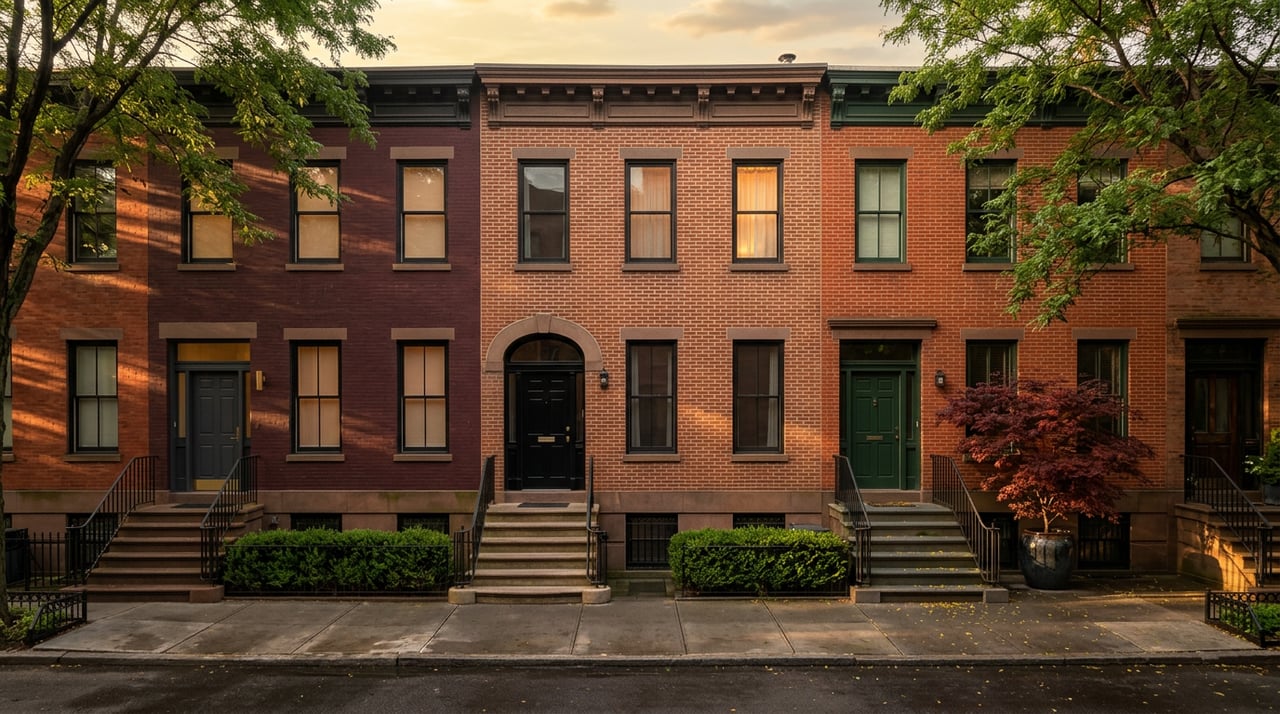
South End offers a similarly central location, but with a different atmosphere. The research describes it as a landmark district just minutes from Downtown and Back Bay, with nearly 30 parks, Victorian brownstones, and a strong restaurant and arts scene.
For many relocating professionals, South End works well when you want an urban environment that still feels residential in parts. You get close access to central Boston while also having a neighborhood known for historic streetscapes and open green spaces.
South End is also a premium market. Zillow neighborhood data in the research places average home value around $1.06 million, so it is important to align your search with your budget early.
If you want an urban setting but are open to living outside Boston proper, Cambridge is often one of the first places to consider. The city includes 13 neighborhoods, and Harvard Square is described by Cambridge as a regional, pedestrian-friendly commercial center and one of the Red Line’s busiest hubs.
Cambridge can be especially appealing if you want strong transit connections and a city environment with multiple neighborhood options. The research also notes that 2026 bus-service changes connect Kendall/MIT, Central Square, Harvard Square, and nearby neighborhoods, which reinforces Cambridge’s transit-oriented appeal.
On current Zillow averages cited in the research, Cambridge rents are around $3,500 per month. That puts it close to Boston for rental cost, so the choice may come down more to your preferred environment and commute pattern than to a major price difference.
Brookline is a common shortlist option for people who want a close-in location with a slightly different pace from central Boston. The town is served by the Green Line C and D branches, with B-line access in North Brookline and E-line access in Brookline Village.
The research also points to Brookline’s complete-streets policy, which emphasizes walkable neighborhoods and commercial districts. In practical terms, that supports Brookline’s reputation as a place where you can combine rail access with a village-center feel.
Brookline tends to be one of the pricier rental options in this comparison. Current Zillow averages in the research place rents around $4,400 per month, so it is wise to plan carefully if you are entering the market from overseas and want flexibility on timing.
Newton is often a strong fit if you want more space while staying connected to Boston. The research describes it as more suburban, but still linked by Green Line stops and commuter rail stations, with village-center zoning intended to focus housing and commercial activity near transit and amenities.
That combination can be appealing if you are relocating with more household belongings, working hybrid, or simply want a home environment with a bit more room. For many international families and professionals, Newton offers a practical balance between access and breathing room.
On current Zillow averages cited in the research, Newton rents are around $3,400 per month, which is lower than Brookline and roughly in line with Boston and Cambridge. That can make Newton especially worth considering if space is a priority.
Here is a simple way to frame the tradeoffs:
| Area | Best fit for | Transit and setting | Current rent context |
|---|---|---|---|
| Back Bay | Central Boston lifestyle | Dense, walkable, car-light | Boston average around $3,500 |
| South End | Central living with parks and historic character | Minutes from Downtown and Back Bay | Boston average around $3,500 |
| Cambridge | Transit-rich city setting | Red Line hub access and connected bus network | Around $3,500 |
| Brookline | Village-center feel near Boston | Green Line access and walkable districts | Around $4,400 |
| Newton | More space with rail access | Green Line and commuter rail connections | Around $3,400 |
If you are moving with children, school logistics can shape your housing timeline. In Greater Boston, enrollment is closely tied to where you live, so your address often affects when and how you can register.
Boston Public Schools serves more than 48,000 students in 121 schools across 17 neighborhoods. Cambridge Public Schools serves roughly 6,750 students in 17 schools and uses Controlled Choice, while Newton Public Schools lists 15 elementary schools, 4 middle schools, 2 high schools, and 2 alternative high school programs.
For families arriving from abroad, multilingual support can be an important part of the process. Brookline Public Schools provides English Language Education services to more than 750 students in grades PK-12 whose primary language is not English, Newton Public Schools has a Welcome Center with multilingual support, and Cambridge Public Schools says its Student Registration Center supports incoming families in multiple languages.
Timing matters. The research notes that Cambridge can accept digital registration materials and may schedule an English-language assessment for children entering U.S. school for the first time, while Brookline and Newton both require proof of local residence before school start.
If you plan to rent first, Massachusetts rules are worth understanding before you apply. Under Massachusetts law, landlords may collect first month’s rent, last month’s rent, a security deposit up to one month’s rent, and the cost of a new lock and key at move-in.
Boston’s tenant guidance also says a typical lease runs one year, though month-to-month tenancy-at-will is also used. That matters if you are trying to coordinate a temporary landing spot before committing to a longer-term plan.
There is also an important broker-fee update. According to the City of Boston’s housing guidance, as of August 1, 2025, landlords cannot require tenants to pay a broker fee unless the tenant hired the broker.
Security deposit handling matters too. The same research notes that security deposits must be held in a separate Massachusetts interest-bearing account, and landlords must generally return the deposit and interest within 30 days after the tenancy ends.
If your move will happen in late spring or summer, it helps to be ready before you start touring. Zillow month-by-month rent data cited in the research suggests the rental market can tighten during those periods, with Cambridge, Brookline, and Newton all showing rent increases during parts of 2025.
That does not mean every listing will move instantly, but it does support a practical strategy: organize your documents early, clarify your budget, and be ready to apply promptly if the right rental appears. For international movers, preparation often creates the biggest advantage.
If your goal is to buy soon after arriving, financing preparation is just as important as neighborhood selection. The Consumer Financial Protection Bureau says preapproval helps define your budget, and closing costs typically run about 2% to 5% of the purchase price.
The same CFPB guidance notes that lenders must provide a Closing Disclosure at least three business days before closing. For overseas and relocating buyers, that is a good reminder that paperwork, timing, and financial coordination should start early.
In practice, many international buyers benefit from taking these steps first:
If you are still deciding where to begin, a simple framework can help. Choose Back Bay or South End if your top priority is a central Boston lifestyle with walkability and easy access to core city amenities.
Consider Cambridge if you want a city setting with strong transit connections and several distinct neighborhood environments. Look at Brookline if you value a rail-served, walkable setting with a village-center feel.
Focus on Newton if more space is important and you still want rail access into the broader Boston area. None of these choices is universally best. The right fit depends on how you want to live day to day, what your timeline looks like, and whether you are renting, buying, or doing both in sequence.
Relocating from abroad comes with a lot of moving parts, but the process gets much easier when you have clear local guidance and a strategy built around your goals. If you want help comparing Boston, Cambridge, Brookline, or Newton, or need support with a rental or home search, Alexandra Haueisen can help you plan your move with clear, research-driven advice.
Stay up to date on the latest real estate trends.
Whether you're ready to buy, preparing to sell, or simply exploring your next steps in the Greater Boston area, Alexandra is here to help you move forward with clarity and confidence. She offers personalized consultations, market insights, property valuation guidance, and tailored recommendations based on your goals. Reach out today to start a conversation and experience attentive, detail-driven support that leads to meaningful results.